01
Surface Reaction
Specially formulated vapors react with moisture present at the glass surface and interact with the silica in the substrate.
Wayne’s Wax proprietary infrared covalent glass coating technology is engineered to create a durable, highly hydrophobic protective surface.
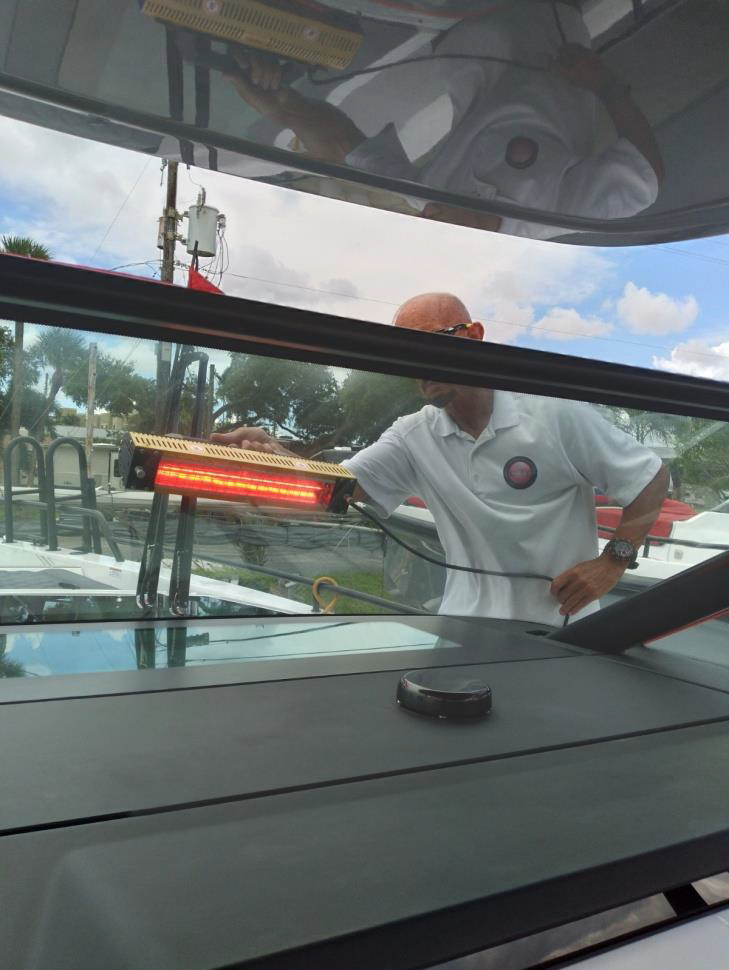
Wayne’s Wax proprietary infrared covalent glass coating technology combines specially formulated vapors with an infrared drying process to create a highly durable hydrophobic treatment for glass.
During application, the specially formulated vapors react with surface moisture and the silica in the substrate. The infrared process then assists in bonding and sealing the treatment to the glass.
The result is designed to be substantially more than a conventional surface-applied water repellent: the process creates a chemical bond with the glass substrate itself.
The technology uses a specialized chemical and infrared process to produce a covalent bond between the treatment and the glass.
The treatment is designed to chemically bond with the glass substrate rather than simply sit on top of it.
According to the technology description supplied for Wayne’s Wax, the bond created during the process is a covalent bond — a chemical bond in which electrons are shared between atoms.
The treatment is formulated to interact with the silica present in the glass substrate. This creates a cross-linked silicone film below the surface rather than relying solely on a conventional temporary surface film.
Covalent bonds are described as substantially stronger than the hydrogen-bond interactions commonly associated with many other water-repellent coatings.
Primarily relies on interactions at the surface of the substrate.
Designed to create a chemical bond with the silica-based glass substrate.
The proprietary process combines chemical preparation, vapor application and infrared energy to develop the finished hydrophobic surface.
Specially formulated vapors react with moisture present at the glass surface and interact with the silica in the substrate.
An infrared drying process is used during treatment to assist in converting and bonding the coating system to the glass surface.
The chemical process creates a cross-linked silicone film below the surface, increasing hydrophobicity and durability.
The infrared component distinguishes this treatment process from a simple wipe-on or spray-on water repellent. Infrared energy is incorporated into the application process to assist the chemical reaction and sealing of the treatment.
This controlled process is intended to produce a durable, highly hydrophobic surface while integrating the treatment more deeply with the glass substrate.
During the process, chlorine atoms are converted to OH groups through interaction with additional moisture. A second specially formulated vapor is then introduced to the surface and interacts with the developing chain of atoms.
This process is intended to substantially increase the hydrophobic characteristics of the treated glass and produce a durable repellent surface.
The result is a glass surface engineered to resist water and contaminants through a chemically bonded treatment rather than relying solely on a conventional surface film.
Glass surfaces exposed to water, salt, weather and airborne contamination can benefit from advanced hydrophobic treatment and easier surface maintenance.
Explore the Wayne’s Wax approach to infrared covalent glass restoration and advanced hydrophobic surface protection.
Contact WDD International